
Few weeks from now Indraganti’s Mayabazar would hit the screens. It appears (?) that it does not have any similarities with the evergreen classic produced by Chakrapani-Nagi Reddy duo. All it does share is the name, which is in itself an honor for the national award winning filmmaker. The success or the failure of this new movie will have no bearing on the original. Infact it might even add more value to the makers of the original as cinegoers now would have to figure out a way to distinguish the various versions of Mayabazar. And in all probability they would start calling their beloved film as Vijaya vaari Mayabazar.
Why is the name of the production house an obvious choice instead of the legendary director KV Reddy?
Mayabazar stands an outstanding example of excellence in all the crafts of the moviemaking contributing to a lasting movie experience. When such teamwork comes to the fore, the environment or the set-up gets lauded before anyone/anything else…hence the production house takes the credit first. The credit of course includes bringing the creative genius KV Reddy to the project. Mayabazar is a testimony to the role of the entity that houses the project and the producer who bring a lot more to the table than merely ensuring the project’s financial closure.
Producers’ Guild of America states the role of a producer as someone who initiates, coordinates, supervises and controls, either on his own authority, or subject to the authority of an employer, all aspects of the motion-picture and/or television production process, including creative, financial, technological and administrative. A Producer is involved throughout all phases of production from inception to completion, including coordination, supervision and control of all other talents and crafts, subject to the provisions of their collective bargaining agreements and personal service contracts.
The above role definition might sound pretty obvious to many of us and we might even assume that the producer has the authority and the responsibility for the collective vision of the filmmaking team. In reality, most of the producers today do not seem to conduct such a role resulting in a star in any one department dominating at the expense of the overall movie experience. The producer seems oblivious to the most important role of that of a guardian of the collective vision, allowing subjectivity of the individual members to overflow. Hence, a movie that could be a delectable meal of many varieties ends being the showcase of a single or a few crafts of the making team. No wonder that the blockbusters in the last few decades are remembered more by the stars or the directors rather than the production houses/producers.
Coming back to Mayabazar, let us look at a few facets of the classic, as it would be futile to throw spotlight on the entire Himalayan range. While at it, let’s explore how the producers managed the ‘collective vision’ and the relevance of the same to the current filmmakers.
- Story idea, the setting and its development: Mayabazar narrates a fictitious tale woven around the Hindu mythological characters and incidents from Mahabharatha. The story moves forward based on three relationships-Sri Krishna, Sakuni; Balarama, Duryodhana; Abhimanyu, Sasirekha-and it changes course with the elements of greed (Balarama’s wife) and Maya (Ghatodgaja/Sri Krishna). The story and its treatment successfully blends the age-old successful love track with a wonderful entertainment set ups thrown in by the ‘Maya’ of Ghotokcha/Sri Krishna and in turn justifies the title Mayabazar. While everything else provides the framework, the ‘Maya’ holds spell on us and entertains us.
- Production design and budget: In any fantasy/mythological genre the scale becomes very important. It is the scale that decides the design, and finally the design that decides the budget. Mayabazar gets this order right. It is first mounted on a canvas that befits the story and characters, and not tailored to stars/actors. Hence, you can see the same uniqueness in the den of Ghatodgaja, his overall appearance and in that of Sri Krishna and his ambience. Interestingly, the mountings of Hastinapura are understated. A wonderful example as to where to spend the money, than blowing it all away where not needed. This clarity sets in when one stays true to the vision-what one sets to achieve-and the script that dictates it.
- Songs and background music: Mayabazar has a great musical score and stands as one of the best in Telugu movies. Equally significant is the placement of songs and how they are a part of story narration or serve as a lead to the next scene. A case in point : An ‘item-song’ in the later part of the film is used brilliantly in the next scene to generate comedy when Sastry-Sarma duo walk in mouthing praises on Yadavas, It is this ‘context’ that is derived from the story which provides the recall value for repeated cinegoers. No wonder that the wonderful background score haunts us even today, specially the ‘Kor Kor Saran Kor’ chorus during the Abhimanyu’s confrontation scene with ‘Maya’ of Ghatodgaja.
- Side attractions – special effects, item songs and comedy tracks:
Mayabazar is replete with situational comedy and gags throughout. However, Mayabazar also serves additional attractions blended neatly into story narration. And it is the ‘Maya’ that shines through them. Let it be the scene of Sastry-Sarma duo’s tryst with ‘Gimbali-Gilpam’ or the ‘ballet song’ in Ghatodgaja’s den, they are crafted to fuse into the story. They serve as additions/props and not as main attractions. Special effects deserve a mention here. While there are tones of it all over the film, they assist the narration and not just to create a milieu. This is an unique aspect in Mayabazar and Vijaya’s filmmaking, which probably even a Steven Spielberg can not match. Once again, the producers had the blueprint and the main objective in their mind, and made sure that nothing went overboard. In the process, no craft was sidelined and each contributed to the symphony called Mayabazar.
- Scene heroes: Over the years, the entire craft of filmmaking has
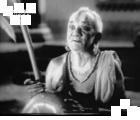
gone in preference of the stars/big actors. Most of the times even shots are framed in such a way so as to ‘show favor’ only to the star/lead actor. Mayabazar stands apart. It shows that it is the
script that dictates the favor and not the artist. This is the reason why in a scene which features a less popular artist mouthing ‘China Mayanu Penu Maya’, the artist holds his fort even against the mighty SVR and delivers a great performance. There are several such scene heroes in Mayabazar.
Hmm.. Mayabazar is nothing short of a textbook for the film fraternity and it has been so for over five decades now. Almost all the great Telugu directors at one and point or the other have made references to the content or the making of this movie and openly acknowledged the influence of the movie and the director KV Reddy. Darsaka Ratna even tried unsuccessfully to remake it in the social genre. Critics might argue that Mayabazar is probably a rare happening almost pre-ordained when the best in the aspects of filmmaking came together and it would be futile to match the magnum opus. But, it does not hurt to revisit the classic and take cues on collective vision and the management of it.
Let’s hope that Indraganti’s Mayabazar or Satyam Entertainments’ Mayabazar would alteast pick a leaf or two from the original.
Wouldn’t be a sheer ‘Maya’ to expect anything more than that?
* * * * * * * * * * * * * * *
Related links
The ‘Maya’ of Mayabazar
Related links

