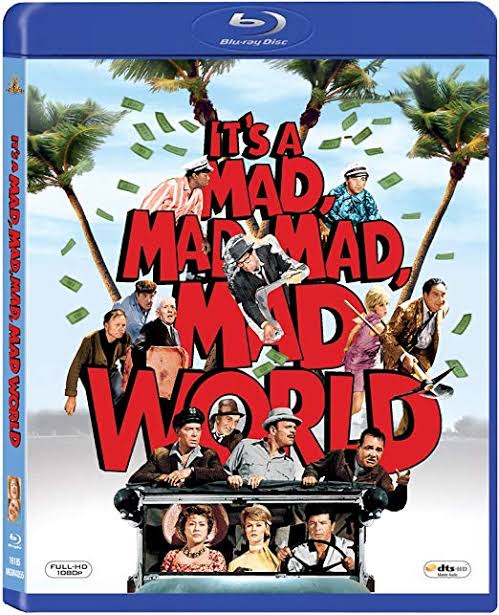
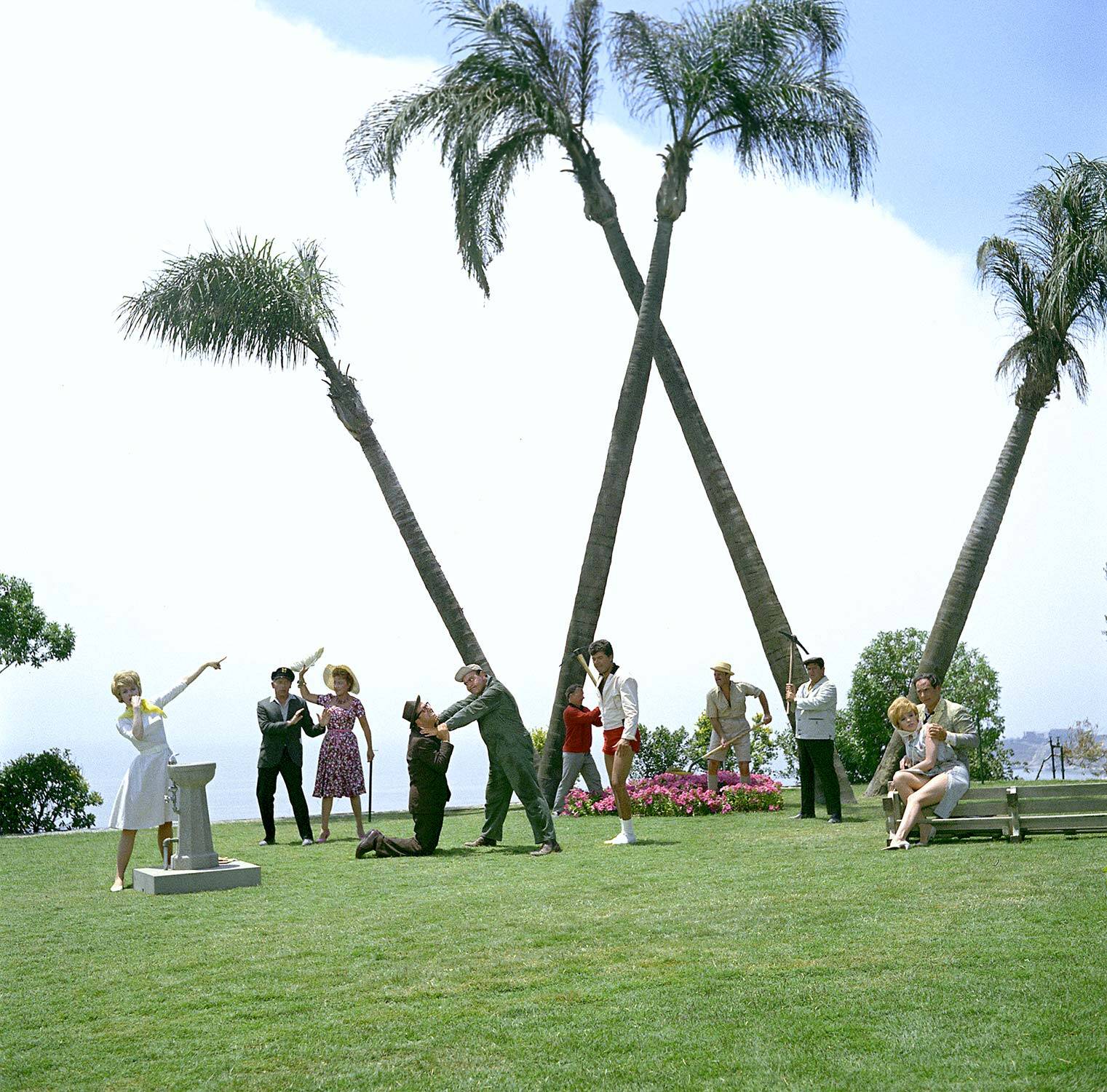
Stanley Kramer’s ‘It’s a mad mad mad mad world’ is a wild comedy caper. It has ludicrous situations and far-fetched comic stunts. But what’s really amazing about the film are the subtle themes that are showcased. Here are a few examples.
An honest cop who decides to stray after all.
A woman in a unhappy marriage suddenly ‘dreams’ a way out.
Greed of common men when put in uncommon situations
‘W’ marks the spot
Touted as a classic, the movie has inspired many other movies in whole and in parts.
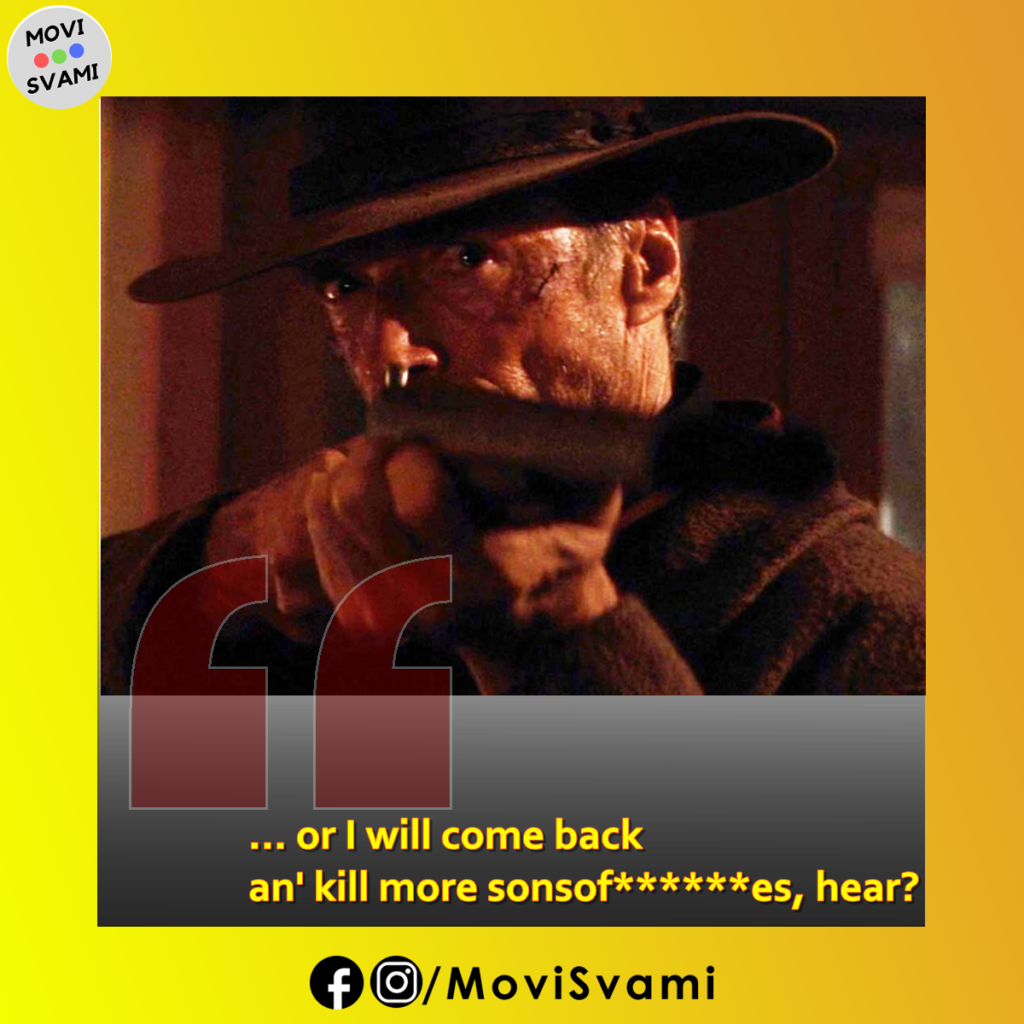
‘Unforgiven’ is one of the best works of Clint Eastwood, for which he even received an Oscar for Best Direction. Clint Eastwood also portrayed the lead character (Will Munny) close to his real age, that of a killing-haunts-you-forever kind of gunslinger, a progression from his usual killing-is-cool-cowboy kind. But the real highlight of the film is the climax, where the fury of the main character is unleashed, where one big act of violence is needed on the part of Will Munny, a final bridge of fire he has to cross, to ride on his road of redemption. Very few movies can speak of this kind of character arc, where the audience get to see the real facet of the character that late in the movie time line. Clint Eastwood pulls off this remarkable feat, aided by a super screenplay from David Webb Peoples and some solid support from terrific co actors like Morgan Freeman and Gene Hackman (who won the Best Supporting Actor Oscar for his role).
Vaa Vaa
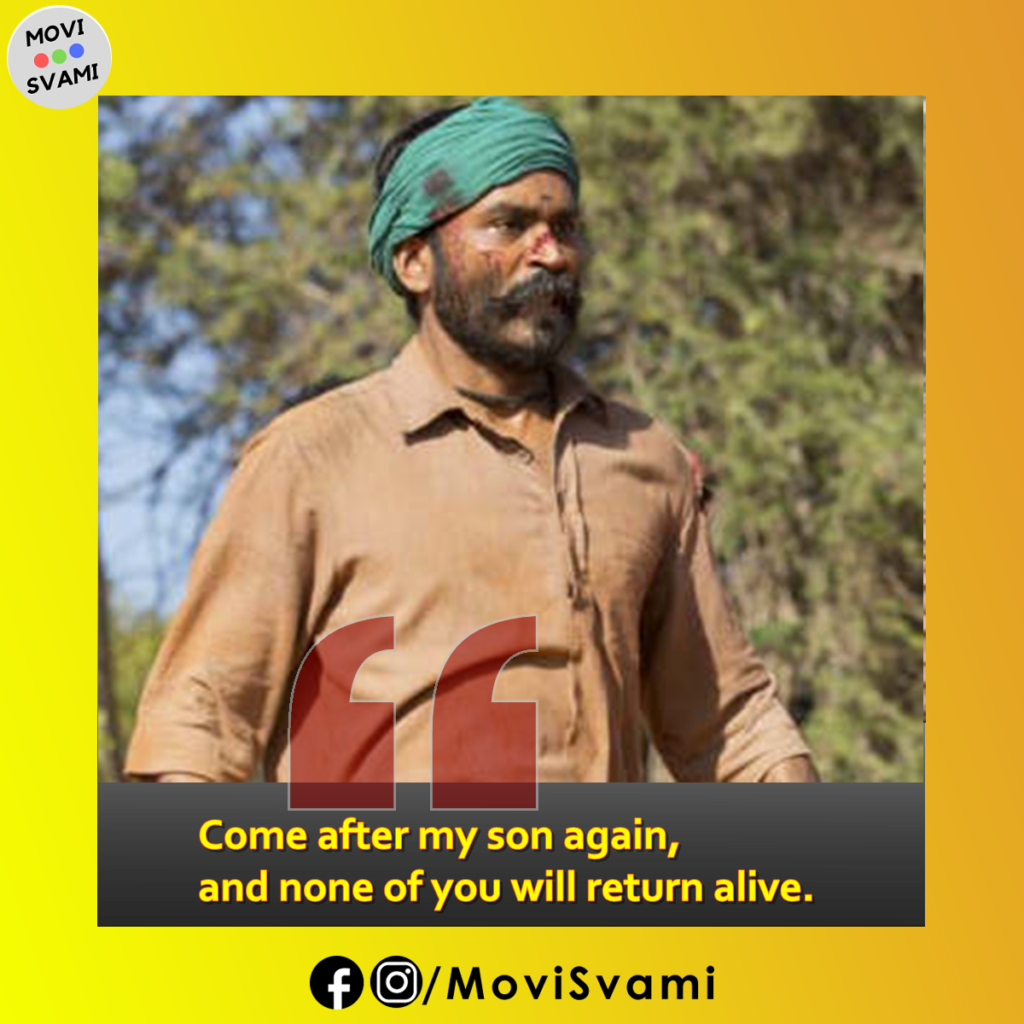
‘Asuran’
plays on similar kind of character arc, but the reveal happens just before intermission
(an absolute treat for Dhanush’s fans). A flashback ensues and the movie ends on
a predictable note. Dhanush plays the character to perfection, and showcases
the amazing transformation from the subdued father to the violent man, and as someone
who gave up violence yet having to use it as a last resort.
While in
Unforgiven, the main protagonist is forced to take up old ways for the sake of
his family and things go awry; in Asuran
it is the circumstances and social milieu that decide the lead character’s
emotional balance or the lack of it. In both cases, when things go out of hand,
the ‘Asuran’ in them is set loose, a bit like ‘The Hulk’.
But when
things go out of hand, it is a close friend’s death that brings out the beast in
Will Munny, and the Asuran is unleashed when his son’s life is in danger.
It is always a pleasure to see the hero showing restraint and the shades coming to fore in bits and pieces (like that of inimitable Amitabh’s Tiger character in ‘Hum’ that also inspired Rajinikanth’s ‘Baasha’), when the situation demands. Both ‘Unforgiven’ and ‘Asuran’ give ample scope for such scenes, thus make them must watch films.
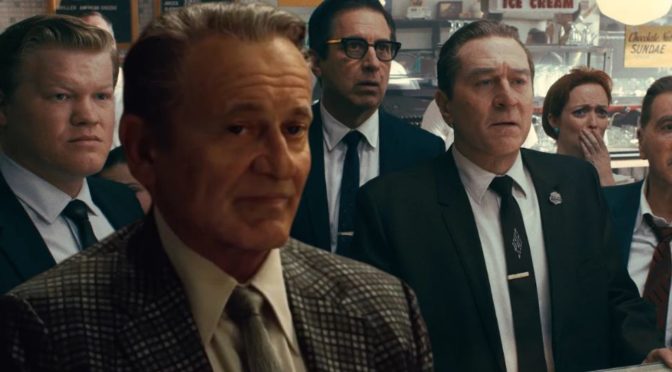
In the end credits of ‘The Irishman’, Robert De Niro shares the ‘Produced By’ credit with Martin Scorsese. A good producer typically relegates himself to the background once his duties are finished or when the spotlights are on, and resurfaces whenever required, in whichever role that is required. (Great producers don’t even mind to fill in for a light boy if need be, to avoid the meter ticking in idly.) Robert De Niro does the same to the proceedings on the screen. As Frank Sheeran aka The Irishman, he holds the story together, does his bit in every scene he is put in and plays his part to perfection. Let it be the hitman and his gusto, or the father painfully aware of his growing estrangement with his daughter Peggy (Anna Paquin) or as the loyal follower to his mentor Russell Bufalino (Joe Pesci) who takes care of him like a kid or as the frustrated henchman who tries and fails to convince his union boss Jimmy Hoffa (Al Pacino) to mend his ways or that older self with simple (yet so near impossible for any other actor) forlorn look in the car wash, hoping to find something similar to cleanse his sins…it is vintage Robert De Niro all the way. And he shows one can still be a boss, even while staying quietly in the background, even when playing a side kick the other two great actors- Pesci and Pacino.
Martin Scorsese brings these three great actors together and yet makes sure that each one of them gets their due. Not just them, but many others like the veteran Harvey Kietel (who chides Frank about his first side job that involves ‘his’ laundry store), Ray Romano (as attorney Bil Bufalino who helps Frank understand what legal offence is all about), Jesse Plemons (as Chuckie O’Brien and his car seat-fish episode) and several others like the friendly associate of Jimmy who asks what candy is just before Frank blew away a few taxis. Like a true stalwart, director Martin Scorsese puts the film above everyone else, allows everyone to shoulder the weight, and shine in every scene they are in.
Great actors rule with or without dialogues. Sometimes, just their presence is enough. Joe Pesci doesn’t have a ‘funny guy’ routine from ‘The Goodfellas’ or ‘the tough guy’ bashing from ‘The Casino’. But he does enough in the two scenes just before Frank leaves for his final meeting with Jimmy. He exudes affection and power at the same time, and Frank has to no choice but to comply.
Same with Al Pacino, who plays the boisterous and very warm Jimmy Hoffa. His contrasting scenes with Robert De Niro and the others, where his ego comes into full play, are a treat to watch. And the final scene before the fateful meeting as he looks on at his foster son and then at Frank (Robert De Niro is terrific here) for assurance, Al Pacino is at his understated best.
Performances wise, nothing a movie buff can ask for more…that too from the best in the business. For this reason, Martin Scorsese deserves singular credit and makes ‘The Irishman’ a must watch.
Tailpiece: Movies to revisit-->The Goodfellas, Casino, The Scent of a Woman, The Godfather-II, A Bronx Tale, Road to Perdition, Donnie Brasco.