All posts by admin

The Economics of Eloquence: What if Words Were a Tradable Commodity?

Generated using DALL-E3

“What if someone had to pay for each word we spoke, much like the character played by Rajendra Prasad in the comedy film ‘Ahana Pellanta,’ directed by Jandhyala? In the movie, the character humorously demands payment for speaking, citing the use of his vocal cords as the reason. If we were to adopt a similar approach, where we had to pay to listen and others had to pay to speak to us, would our conversations become more meaningful? This thought experiment raises the question of how much we truly value our words and the act of communicating.”

The laughter generated by Rajendra Prasad’s character sets the stage for a captivating thought experiment. What if each syllable leaving our lips was a line item on an invoice? Sounds absurd, right? But like all intriguing questions, it opens up a landscape of fascinating insights, especially when examined through the lens of entrepreneurship and conviction.

The Business of Words: A New Entrepreneurial Frontier

Imagine you are a startup founder, walking into a boardroom full of venture capitalists. You’re equipped not just with a pitch deck but also with a “verbal budget.”

Dialogue:

  • Investor: “So, tell me about your startup’s unique selling proposition.”
  • Founder: “Innovative tech. High ROI. Scalable.”
  • Investor: “Just three phrases? Is brevity the soul of your business model, too?”
  • Founder: “When words cost money, brevity becomes an asset.”

In this alternate universe, the art of communication turns into an economic game. Your pitch isn’t just about articulating your vision; it’s about doing so in the most cost-effective manner. It’s not about verbosity; it’s about value. And let’s not forget, in such a world, the words you choose to invest in say as much about your conviction as the dollars you put into your venture.

Challenges & Triumphs: The Winners and Losers in the Word Economy

Think of this paradigm shift as a sort of “verbal Darwinism.” Only the most efficient would survive, like a linguistic version of natural selection.

But what would be the societal costs? How many would fail, not for lack of ideas, but for lack of economical articulation? On the flip side, would this scarcity create a more purposeful engagement, a new breed of entrepreneurs who aren’t just tech-savvy but also “word-wise”?

Picture Steve Jobs in this world. Would his iconic “Stay hungry, stay foolish” have the same resonance if each word had a dollar value attached to it? Or would the weight of the cost make the message even more compelling?

From Thought Experiment to Real-World Reflection

We started with a humorous anecdote from a comedy film and transitioned into a deep, multi-faceted exploration of language and value. So, what can we glean from this conceptual voyage as we return to our current reality where words are free but still hold immense power?

Firstly, the ability to adapt is key. Our world is constantly changing, and whether it’s emerging technologies or fluctuating market conditions, the key to enduring success is the ability to adapt.

Secondly, it’s an invitation to introspect on how we currently “spend” our words. Are we investing them in things that matter? Are our conversations reflective of our priorities, our convictions?

Conclusion: The Future of Our Words

As outlandish as it may seem, the idea of paying for words serves as a compelling framework to evaluate the weight and worth of what we say and hear. It reminds us that words, like any other resource, should be managed wisely. It propels us to be more intentional, more economical, and ultimately, more authentic in how we express ourselves.

So, in a world where expressions are still free, will you hoard your words or invest them wisely? The value of your words, much like your actions, shapes the world you live in. Choose wisely.


The Everlasting Value of Continuous Learning: A Tribute to Andrew Ng and Devi Navaratri

Generated using DALL-E3

As a fervent subscriber to Andrew Ng’s enlightening newsletter, The Batch, I can’t help but share the wealth of knowledge and inspiration that it brings into my life. For those not familiar with Andrew Ng, he is a seasoned professional in the field of Artificial Intelligence (AI) and Machine Learning (ML), and his insights are incredibly beneficial for anyone interested in these areas.

His website, DeepLearning AI, is a treasure trove of resources, brimming with free courses on AI and ML. The content is engaging, informative and always up-to-date, making it an excellent platform for both beginners and pros in the field. If you haven’t already, I highly recommend checking it out.

One of the most endearing aspects of his newsletters is the way he signs off. Each message concludes with the simple yet powerful phrase: “keep learning”. This is not just a sign-off, it’s a mantra, a beacon of motivation that reminds us of the vitality of continuous learning.

Today, on the auspicious day of Devi Navaratri, this message feels even more profound. As we celebrate and worship the Goddess in the form of Saraswati Devi, the deity of knowledge and wisdom, we are reminded of the value of knowledge and the importance of constant learning.

Change is the only constant in life, and in this ever-changing world, it’s the ability to learn and adapt that keeps us afloat. Just like the river that flows, reshaping its course as needed, our ability to learn helps us navigate the twists and turns of life.

So, whether you are an AI enthusiast, a spiritual devotee, or just someone navigating through life, remember the power of continuous learning. Like Andrew Ng encourages, “keep learning”, and like the blessings of Saraswati Devi may remind us, knowledge is a never-ending journey.

On this day of Devi Navaratri, let’s embrace the spirit of learning, the essence of adaptability, and the joy of growing. Because, if change is constant, then continuous learning is the never-changing aspect of it.

Finding Depth in Devotion: The Untold Beauty of Annapoorneshwari Devi and Adi Bhikshuvu

Generated using DALL-E3

The Catalyst: Mantrabalam on NTV

This morning, I found myself glued to an episode of ‘Mantrabalam‘ on NTV, which turned out to be an illuminating spiritual journey. The program delved deep into the adornments and significances of Annapoorneswari Devi during the annual Navaratri festival. It was a refreshing pause from our busy lives, as it beckoned us to look beyond mere rituals and appreciate the profound philosophy underlying these age-old practices.

Lord Shiva as Adi Bhikshuvu: A New Understanding

What struck me most was the detailed explanation of why Lord Shiva is known as Adi Bhikshuvu. The moniker has a captivating backstory: Lord Shiva receives devotion and the six inner enemies—known as arishadvargas—of his devotees, offering ‘Mukthi’ (Freedom/Salvation) in return. This beautiful exchange is symbolically captured in the image of Lord Shiva holding a begging bowl, standing next to Goddess Parvati adorned as Annapoorneshwari Devi.

The Act of Annadanam

The presenter eloquently tied this imagery into the act of annadanam, the giving of food. The concept here is fascinating: anyone who is hungry is an embodiment of Lord Shiva, making the act exceptionally dear to Goddess Parvati. This is a principle that transcends individual faiths and can be found echoed in the teachings of Shirdi Sai Baba.

The Necessity of Spiritual Insight

It’s not uncommon for us to be engrossed in the technicalities and lose sight of the spiritual richness these rituals offer. Mantrabalam reminds us to pause and rediscover the essence of these practices, restoring them from mere actions to acts filled with meaning.

Exploring Further: From Varanasi to Hornadu

If your interest is piqued, I recommend diving into the fascinating story of Goddess Annapurna and Varanasi. Additionally, Hornadu’s temple in Karnataka is a must-visit for anyone wishing to experience the grandeur of Annapoorneshwari Devi. According to lore, the idol at this temple was installed by Adi Sankara himself. For those of us closer to Hyderabad, the divine sight of Lord Shiva next to Goddess Parvati can be witnessed in Vijayawada’s Kanakadurga temple.

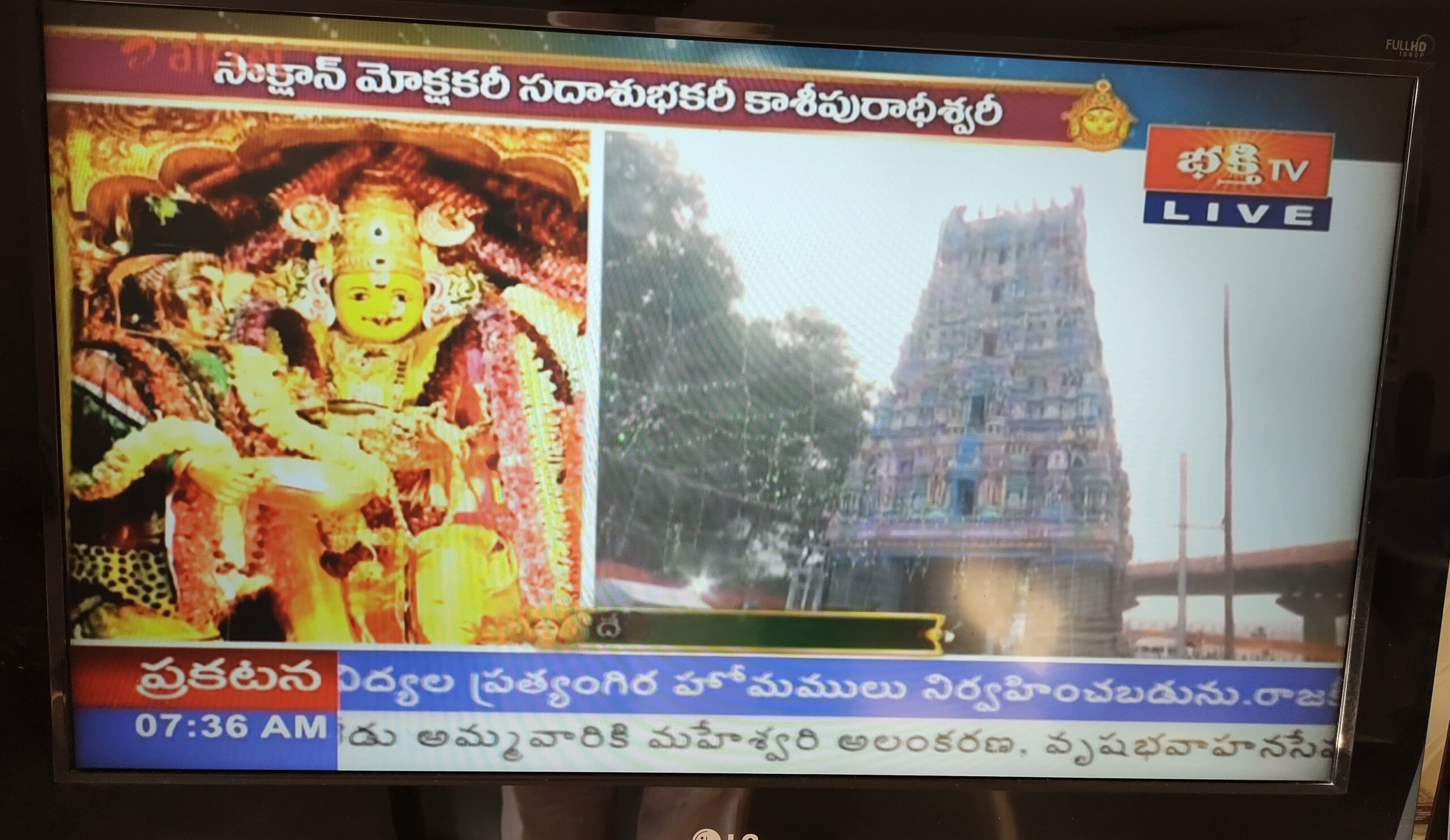
October 17, 2023: Bhakthi TV, 7:36am

Reflecting During Navaratri

As Navaratri festivities unfold and many of us engage in fasting and other rituals, let’s pause and think about those who are fasting not by choice, but by necessity. This is an opportunity for us to make a difference, however small it may seem. One way to contribute is by supporting noble initiatives like Akshayapatra by ISKCON.

Conclusion

As we navigate through our busy lives, sometimes all we need is a small nudge to remind us of the deeper spiritual truths that can enrich our existence. Whether through a television program like Mantrabalam or through our own discoveries, let us strive to find depth in our devotion, not just during Navaratri but all year round.