Category Archives: ET

‘Halal Love Story’

https://www.instagram.com/p/CGeTMP_DhWx/

Films like ‘Stranger than fiction’, ‘Bowfinger’, ‘Harishchandrachi Factory’, ‘Get Shorty’ etc explored either the personalities involved in film-making or the process of it.  And films like ‘Abhimaan’, ‘Sur’, ‘Swathi Kiranam’, ‘Rangeela’ ‘Janam’ etc threw light on the relationships of the protagonists and how they change for better or worse during the course of their artistic careers or specifically during a project..

‘Halal Love Story’ does a combination of both. It’s about a bunch of likeminded people who know exactly what their film should be, yet absolutely ignorant of the whole process. Interestingly they get the first step right—The producers. These are like the Chili Palmer(Get Shorty) kind in ‘who believe they don’t have to know much about producing’, yet smart enough to make the key decisions about how their film would eventually turn out as per their inspiration, which in this case is the Iranian classic ‘Children of Heaven’.

‘Halal Love Story’ is an endearing tale of emotions and how the simple things become complicated in life and then simple again. It’s a must watch for any person who is interested in movie-making and management. What in management? One can still stick to his principles and get a project done and that accommodating the emotions of the team always helps in a better output.

Tailpiece 1: ‘Bowfinger’

Q:Why don’t you wait till you get a star who wants to be in it?
Mr.Bowfinger: I’m 49 years old. Admittedly, I could get away with 44, 41, maybe 38. But when you hit 50, they don’t hire you anymore. It’s like they can smell 50.

Tailpiece 2: ‘Get Shorty’

Q: What the f do you know about producing?
Chili Palmer: I don’t think the producer has to do much, outside of maybe knowing a writer.

Tailpiece 3:

When my father made a film for TV, he called it TV Cinema 🙂 That’s the same term producers use in ‘Halal Love Story’ 🙂

Tailpiece 4

Sync sound used to be a very expensive affair. Not sure how it was even considered at that time. But the cameo of Soubin Shahir is very funny.
Meet Viju Prasad

More of Viju Prasad coud have helped Anwar Rasheed’s ‘Trance’?

https://www.instagram.com/p/CGG0zl_jvdU/

In the late 80s any attempts to deviate from the regular was met with a disaster at box office. This was especially true for big stars like Amitabh Bachchan. His terrific portrayal in ‘Main Azaad Hoon’ couldn’t help the film from sinking without a trace. The film itself was an adaptation of Frank Capra’s classic ‘Meet John Doe’, where a good for nothing simpleton becomes an overnight sensation, thanks to some crafty schemes of the men behind, who pull the right strings. What happens when the puppet decides to have its own life and break away from the powers to be, is the crux of both films. Without sounding repetitious, or rather sounding repetitious, one has to agree that it is one of the best performances of Amitabh.

‘Trance’ reminds you a bit about these films. A mentally depressed person is picked up and groomed to be a pastor, who can connect to millions of people. While the pastor is bringing his followers the sunshine of Jesus’s miracles, his masters make hay.  One fine day, the pastor/puppet decides to break away and that’s when the movie goes into a spiral and never recovers.

Mental depression or for that matter any mental illness is hard to spot, unless the intensity is so much, that the person shows the symptoms all the time. Otherwise, they look and come across as normal, barring those episodes where the other selves kick in, which most of the times could be when they are alone. The first half of the movie achieves this depiction brilliantly, with Fahadh Faasil switching from one shade to the other, effortlessly. It’s the script in the second half that deserts him, leaving him repetitive and confused, just like the audience.

Overall, ‘Trance’ is an okay film for a one time watch, powered by a spirited performance from Fahadh Faasil and tied in by the novelty of the theme.

Tail piece 1: At the end of the show, when someone was asked about how the film was, he apparently said ‘Main…. Azaad Hoon!’ (‘At last… I am free!). Back then, such negative reactions did cause much hurt to sincere Amitabh fans like me 😉

Tail piece 2: For a few moments I wondered if the movie would take RK Narayan’s ‘Guide’, where the pastor redeems himself as a true saviour or a seeker. Reminding us of such possibilities indeed shows that the script had a lot of promise, which evaporated once the typical denouement of plots was chosen. Ex. The antagonists getting butchered and washed under a (Quentin Tarantino) blood splurge

Tail piece 3: When one is battling mental illness, he/she should reach out to qualified doctors and stay away from dark suited businessmen, even if they were the likes of Gautham Menon. 🙂

St.Elsewhere S1- A Classic

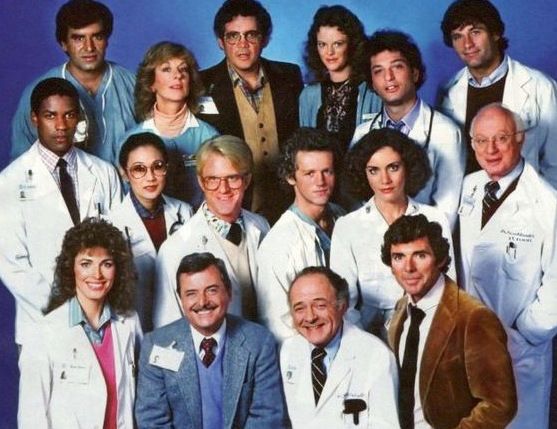
St.Elsewhere (1982-1988) was an acclaimed and award winning TV series that appealed to a niche audience.It was set at the fictitious St. Eligius Hospital, which was often derided as St.Elsewhere in the medical circles for its not-so-great infrastructure.

The TV series takes us through the lives of the dedicated staff, who fight it out against all the odds to give the best possible medical care to their patients. The episodic format allowed the writers to introduce a new patient (in the form of terrific actors like Tim Robbins, Thomas Hulce etc) and weave his/her personal story into that of the key characters.

The structure of the TV series hovers around these four. (Spoilers ahead)

  1. Establish the not so perfect world through the eyes of the key characters (The hospital itself being treated as a character. The long takes are as if the hospital, a third eye, allowing us to peep in to the extent it wants.)
  2. Introduce new characters often as patients every week bringing in new problems that affect the lives of the lead actors/protagonists. (Sometimes non-patients are introduced as well, like a lawyer who helps out on a malpractice suit or a heart specialist from Hungary or a lobster fisherman struggling with his brother’s cancer etc)
  3. The key characters learn something about themselves while teaching or treating or just interacting. (Dr. Auschlander’s conversation with a liver patient is one of the best, who sees hope in life inspite of his own terminal condition. Second best is Dr. Westphall’s honest feedback to Dr.Craig and how he takes it.)
  4. Present the flow of life. Life goes on no matter what, and how hopeless it seems to be. (Season 1 ends with Auschlander making a toast to life)

St.Elsewhere Season 1 is top notch, both writing and acting wise. The ensemble cast is out of the world, featuring seasoned hands (at that time) like Ed Flanders (As Dr. Donald Westphall), William Daniels (as Dr.Mark Craig), David Birney (as Dr.Ben Samuels), Norman Lloyd (as Dr. Daniel Auschlander) and also top actors today who just started out back then like David Morse (as Dr.Jack Morrison), Denzel Washington (as Dr.Philip Chandler) and a host of others weeklies like Tim Robbins (in ‘Bypass’), Thomas Hulce (in ‘Family History’), Ray Liotta (in ‘Rain), Dick O’Neill & Michael Madsen (in ‘Remission’), Howard Duff (in ‘Addiction’) and Pat Hingle (in ‘Brothers’).

Tailpiece 1:

In one of the episodes, Dr.Craig prepares a definitive list of to-do for his party, sort of a harbinger to Craigslist? 🙂

Tailpiece 2:

The hospital’s nickname, “St. Elsewhere”, is a slang term used in the medical field to refer to lesser-equipped hospitals that serve patients turned away by more prestigious institutions; it is also used in medical academia to refer to teaching hospitals in general. Source: Wikipedia

Tailpiece 3:

St.Elsewhere used to be aired on Doordarshan in godforsaken hours. Back then DD used to telecast adult movies during the same time. My father wondered what these episodes were, and watched a few with me. Later, left me alone 😉

Tailpiece 4:

The mix of traits from Dr.Craig and Dr. Westphall probably makes the best manager in the world.