‘North By Northwest’ in a way is a departure from the typical Alfred Hitchcock’s movies. But it is also a testament to the genius of Hitchcock who wanted to reinvent himself in different genres. What he did with ‘North By Northwest’ is create a template for Hollywood blockbusters, and even James bond films for that matter. Steven Spielberg openly acknowledges Hitchcock’s influence, and the scenes where Indiana Jones is picked up from the college in ‘Indianan Jones and the last crusade’ and taken to a house, are a almost a carbon copy of similar scenes in ‘North By Northwest’. What more the villain in the Indiana Jones movie, seems to take a leaf or two from the characterization of James Mason.
According to the writer (from the making feature in the DVD) Ernest Lehman, it all began when Alfred Hitchcock gave an idea of a scene of a delegate’s speech in the United Nations and the ensuing murder, and asked him to work on it. Ernest Lehman then wrote a 65 page treatment which Hitchcock used to green light the project. The rest of the story was developed just in time, before the big shoot of Rushmore sequences.
A must watch for all movie and Hithcock’s fans and the theme music by Bernard Hermann will stay with us long after we finished the movie.
Here is an excellent conduction of the same theme.
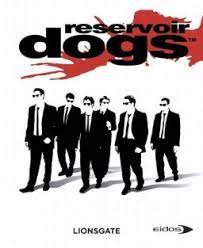
Quentin Tarantino redefined Pulp, rather literally. He made films drawing from his vast knowledge on films he watched and some as an ode to them as well. ‘Reservoir Dogs’, his first major film is a tribute to all the heist films that came before him, and is a great time pass watch.
Here is a terrific piece of dialogue that talks about personal experience and details that add the real flavor to story/screenwriting.
                              FREDDY
What's this?
                              HOLDAWAY
It's a scene.  Memorize it.
                              FREDDY
What?
                              HOLDAWAY
A undercover cop has got to be Marlon Brando.  To do this job you got to be a great actor. You got to be naturalistic. You got to be naturalistic as hell. If you       ain't a great actor you're a bad actor, and bad acting is bull shit in this job.
                              FREDDY
(referring to the papers)
But what is this?
                              HOLDAWAY
It's a amusing anecdote about a drug deal.
                              FREDDY
What?
                              HOLDAWAY
Something funny that happened to you while you were doing a job.
                              FREDDY
I gotta memorize all this shit?
                              HOLDAWAY
It's like a joke.  You remember what's important, and the rest you                 make your own.  The only way to make it your own is to keep sayin                 it, and sayin it, and sayin it, and sayin it, and sayin it.
                              FREDDY
I can do that.
                              HOLDAWAY
The things you gotta remember are the details.  It's the details                 that sell your story.  Now this story takes place in this men's room.
So you gotta know the details about this men's room.
You gotta know they got a blower instead of a towel to dry your                 hands.You gotta know the stalls ain't got no doors.
You gotta know whether they got liquid or powdered soap, whether they got            hot water or not, 'cause if you do your job when you tell your story,               everybody should believe it.  And if you tell your story to somebody                 who's actually taken a piss in this men's room, and you get one                 detail they remember right, they'll swear by you.
A hero’s transformation has a trigger (an external event that is plot driven) and a culmination of series of events that marks the completion as an internal experience (character arc based). Throughout the movie, such transformation keeps happening—single or many. The internal experience keeps building based on character’s beliefs etc and becomes the core of the character. Sometimes such core is presented as various aspects of the character during the progression of the story, and it influences the people around him.
For example, in the movie, ‘The Shawshank Redemption’, Andy’s first transformation is getting used to the prison life, followed by others including that of him becoming dishonest to siphon off Warden’s dirty money. However, his hope, no matter what stays intact. Being a mentally tough person, Andy’s nature brings about certain change in people around him—immediate and for good—and depending on the person who he is, it affects them in a certain manner. For Red, Andy is a very positive experience, while for Warden it becomes a deadly one. As the movie progresses, there are external incidents that are out of the character’s control (Sisters etc) and there are some that Andy takes into his own hands (building the library, the big act towards the climax etc). It is this wonderful combination of what happens to him (external events) and what he makes it happen (out of his core), that moves things forward.
In summary, a character with a strong core (good/bad/gray aspects) when presented with interesting inciting incidents becomes a complete fare. Movies that sport characters with strong core and interesting inciting incidents, have long legs and that same applies to books etc. (If the character is Rama, it becomes Ramayana, if the character is Corleone it becomes The Godfather, if the characters were Colonel Nicholson and Colonel Saito, it would become ‘The bridge on River Kwai’ etc.
And …
if the character is a mast chichora or a bindaas guy and he stays that way even at the end of the movie, it becomes a ‘DJ Tillu’. ‘DJ Tillu’ is one such guy, with the above references common in Hyderabadi Lingo, who thinks he is doing the right thing even when others beg to differ, especially the elders like his father. He lives in his own world; with his own gang and does what he feels is right, much to the chagrin of his father. And then one day, the unthinkable happens when he is struck by a femme fatale.
..the core of the character is? He talks as he feels like and does what he feels like, and goes with the ‘flow. There is another term for such character ‘Gaali Ravi’ (popularised in the movie ‘Shiva’). He gives back to everyone including his father. (He is a bit like the hero in ‘Julayi, but without transformation in the end, probably this is the reason why Trivikram is given credit or for the last dialogue towards the end?)
What can happen to a guy who is dying to sway at even the lightest wind? To make it interesting the screenwriters resort to screen’play’ with larger than life external events (like a tsunami).
It results in an engaging movie. It is about a below ordinary person thrown into extra-ordinary situations.
DJ Tillu is like a day in the life of the hero of ‘Julayi’, with his deep realisation and his inner experience saved for another day. May be for a star hero like Allu Arjun, ‘Julayi’ works and for an upcoming hero like Siddhu Jonnalagadda the flat characterization and oomph does.
As they say the movie is a time pass watch, depending on how valuable your time is.
Giving the credit where it is due.
Not many producers would greenlight a movie like ‘DJ Tillu’, and Sithara Entertainment does stand apart from the crowd. Reading or listening to the script of the movie, and assessing the final output and its impact are very difficult for a film like ‘DJ Tillu’ and they do it with aplomb and success.
Completely crafted as a hero with an attitude film, it sports a terrific performance from the lead actor Siddhu Jonnalagadda who also shares the writing credits. The film has enough twists to make you glued to the screen throughout and the final twists provide enough hero swagger. Music by Thaman is an asset with the title song stealing the show. Siddhu Jonnnalgadda, sets out to do an attitude and style based movie and sticks to it throughout, with witty dialogues.
Tailpiece:
What makes a film stay in the minds of audience? A good for nothing guy who constantly picks up fights with his father or someone who takes him seriously. Even films like The Godfather, is based on family values. The hero usually redeems himself not just by his actions or by virtue of the plot alone, but his character transformation as well. Hmm…