Category Archives: Movies

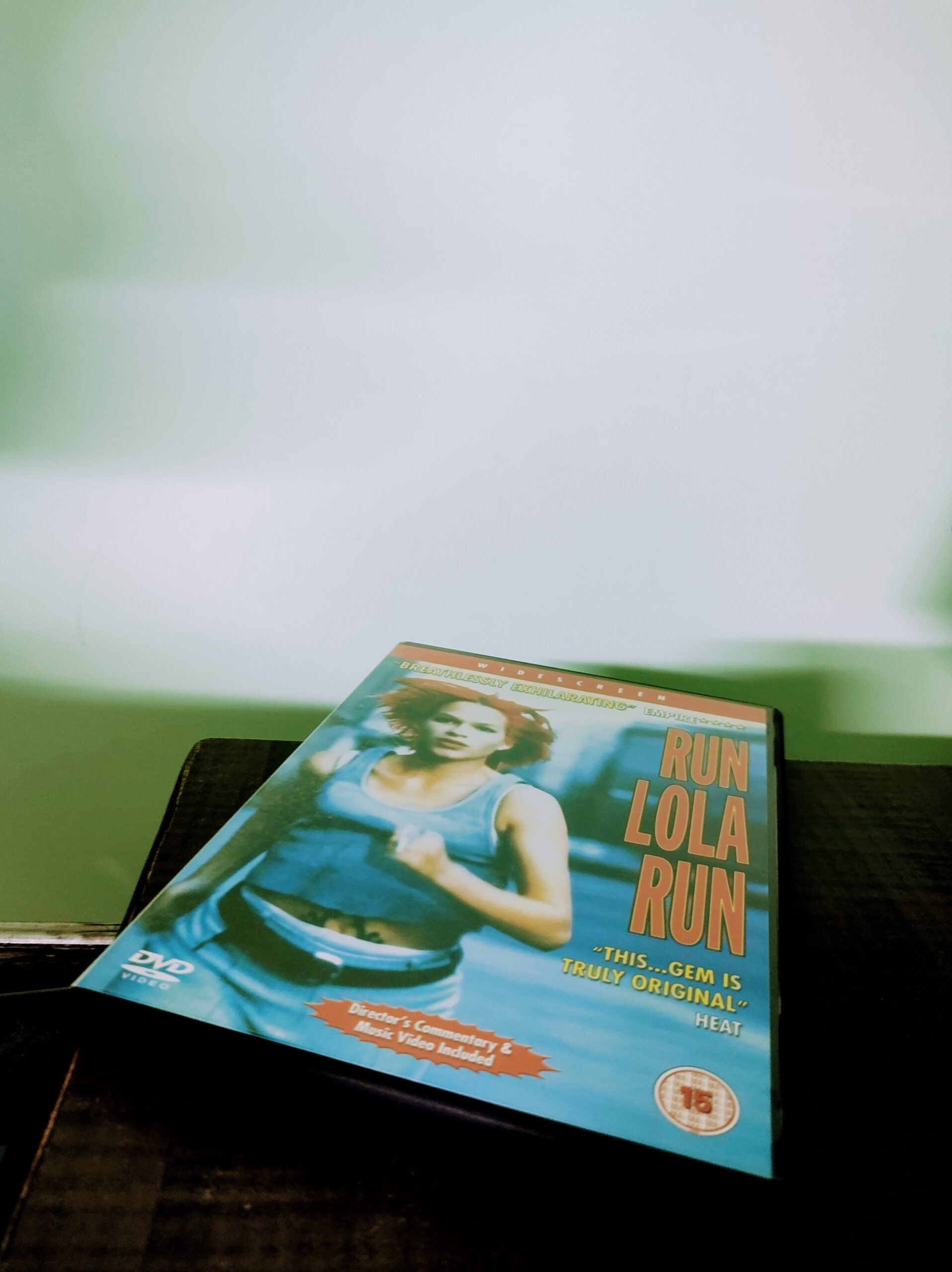
Run Lola Run

Run Lola Run is a German thriller film written and directed by Tom Tykwer. The story follows a woman named Lola (Franka Potente) who needs to obtain 100,000 Deutschmarks in twenty minutes to save the life of her boyfriend Manni (Moritz Bleibtreu).

The film touches on themes such as free will vs. determinism, the role of chance in people’s destiny, and obscure cause-effect relationships. Through brief flash-forward sequences of still images, Lola’s fleeting interactions with bystanders are revealed to have surprising and drastic effects on their future lives, serving as concise illustrations of chaos theory’s butterfly effect, in which minor, seemingly inconsequential variations in any interaction can blossom into much wider results than is often recognized. The film’s exploration of the relationship between chance and conscious intention comes to the foreground in the casino scene, where Lola appears to defy the laws of chance through sheer force of will, improbably making the roulette ball land on her winning number with the help of a glass-shattering scream.

Source: Wikipedia

The film explores the concept of alternate reality where each set of choices Lola makes pushes her and the people she encounters in that reality, onto a different path. However, she can still influence the outcome to the extent possible as per her capability/volition. The taking and presentation of the film, gives it a dreamy look, with audience having to decide if the first two versions of reality actually happened or she thought about it in her head, and may be the last one (with the happy ending one) is the version that actually happened. (In films like ‘Groundhog Day’ and ‘Edge of Tomorrow’, the main character is conscious of the previous versions, and to some extent, Lola also does. But in Run Lola Run there is a lot more ambiguity.)

On the other hand, one can also imagine a scene/reality from the past and try to make amends. This brings us to a famous dialogue from ‘The Shawshank redemption’, during Red (Morgan Freeman)’s parole hearing.

Red : There's not a day goes by I don't feel regret. Not because I'm in here, because you think I should. I look back on the way I was then: a young, stupid kid who committed that terrible crime. I want to talk to him. I want to try to talk some sense to him, tell him the way things are. But I can't. That kid's long gone, and this old man is all that's left. I got to live with that. Rehabilitated? It's just a bullshit word. So you go on and stamp your form, sonny, and stop wasting my time. Because to tell you the truth, I don't give a shit.

Overall, Run lola Run is a must watch.

Tailpiece: Tapsi Pannu’s ‘Loop Lapeta’ is an official remake of Run Lola Run, and available on Netflix.
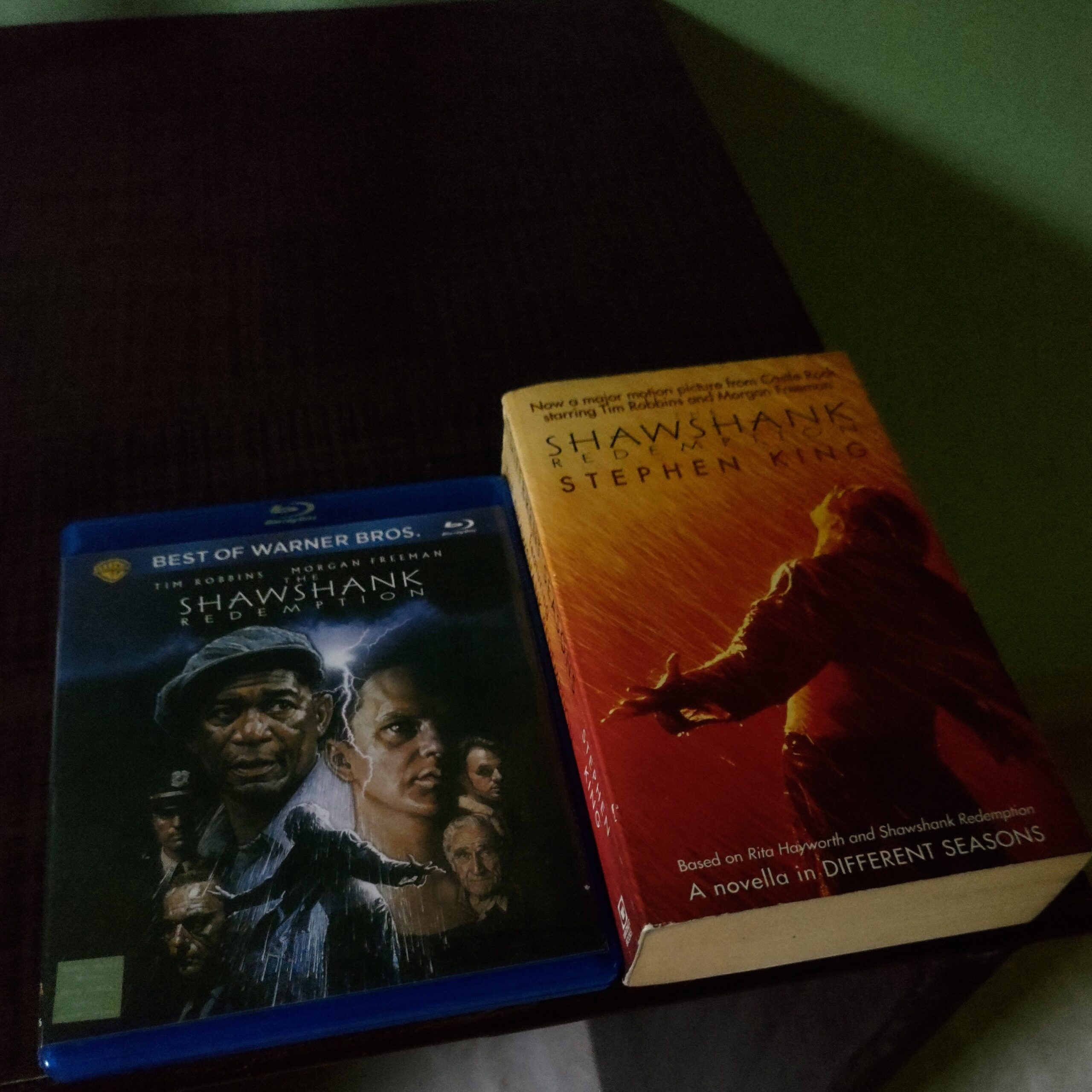
Rita Hayworth and The Shawshank Redemption Vs The Shawshank Redemption

The movie ‘The Shawshank Redemption’ stays true to the short story by Stephen King. In fact it is a matter of great surprise how much the story has to offer as is that makes it into Frank Darabont’s screenplay. Yet, Frank Darabont manages to leave his mark with some nice changes to the overall scheme of things. (Spoilers ahead)

  1. Character of Tommy: In the book, Tommy takes a deal from the warden and moves to a better prison, however in the movie, he is killed by warden. The change in the movie is much better as it provides a drama (the manner in which he his killed) and adds another feather to the cap of ruthlessness of the warden (no prisoners approach). 
  2. Getaway plan: In the book, the plan is a bit complicated with Andy having an associate outside and the details to his getaway plan (once he escapes the prison) is hidden under the black volcanic rock in the field of Buxton. While the aspect of both Andy and Red, coming to the same field to look for their final escape is interesting, the movie simplifies the plan, with Andy taking charge of everything (which is actually true to his character, not depending on anyone),but still leaves instructions to Red, incase he gets out. Most importantly letter to Red is taken as is from the book, as is.
  3. Boggs: Andy’s victory over Boggs and sisters is much clear and presented it better than book.
  4. Warden and main guard: In the book, this combination changes over time, but in the movie they remain same. This is actually good, to keep the villains same throughout.
  5. Time-period: The story drags on for some more years, while the movie understandably reduces it, with the period ending with Lovely Rachael. May be, point 4 is the reason.
  6. Overall narration: The story goes back and forth, with Red narrating it non-linearly, rather jumpy. It is justified, as Red with little education and no special skills in writing, can manage it that way. Frank Darabont, should be credited for making this easy on the viewers, with his screenplay nicely picking the threads and tying up into a whole fabric. He does this with élan, without leaving the important and best parts of the book.
  7. Warden’s investigation into Andy’s escape: The book scores a few brownie points here with details about a skinny guard going through the Andy’s tunnel and finding out the sewer. In the movie, Red’s narration and Andy’s visuals takes care of it, but the skinny guard (may be from the ‘I gave up drinking’ episode) could have made it effective. Frank might have chosen to opt out, because of film’s duration?
  8. Redemption and Revenge: The movie ties this theme neatly, better than the book. Andy’s revenge plot on the Warden is a new addition and provides the last dimension to his Redemption. 
  9. Mozart episode: It is not there in the book. Shows the genius of Frank, and builds on ‘Hope is a good thing’ theme.
  10. I gave up drinking, Andy getting a mouthorgan for Red, Brooke’s episode: All new, added by Frank.

Mash – A classic American war comedy

“MASH” is a classic American war comedy film released in 1970, directed by Robert Altman. The film is set in a Mobile Army Surgical Hospital (MASH) unit during the Korean War and follows the antics of the surgeons and support staff stationed there. The film is known for its black humor, social commentary, and its representation of the counterculture of the 1960s.

“MASH” was a critical and commercial success, grossing over $81 million and receiving five Academy Award nominations, including Best Picture. The film’s success was a turning point in the career of Robert Altman, who went on to direct several other notable films. “MASH” also helped establish the career of actor Elliot Gould, who played the character of Trapper John.

The impact of “MASH” went beyond its box office success and critical acclaim. The film’s style, which combined humor with a skeptical perspective on authority, helped establish a new trend in American cinema. “MASH” inspired a number of other films that tackled serious themes with humor, such as “Catch-22” and “Goodbye, Mr. Chips.” The film’s success also helped popularize the anti-war sentiment of the 1960s and 1970s, and its legacy continues to be felt today as a classic of American cinema.

Memorable scenes: One of the most memorable scenes in “MASH” is the football game between the surgeons and the infantry. This scene showcases the camaraderie and humor of the main characters, as well as their inventive approach to overcoming the monotony of army life. Another iconic scene is when Hawkeye Pierce and Duke Forrest perform surgery while drunk, using unconventional methods to save the patient’s life. This scene highlights the film’s use of black humor to comment on the absurdities of war and the military. One final memorable scene is when Hawkeye and Trapper conduct a mock funeral for a fallen comrade, complete with a funeral procession down the main street of the hospital camp, which serves as a poignant commentary on the loss and senselessness of war. These scenes are just a few examples of the film’s memorable and impactful moments that have helped establish “MASH” as a classic of American cinema.

Making of “MASH” : The making of “MASH” was filled with interesting stories and events. One of the most notable was the casting process. Originally, the studio wanted to cast big names in the lead roles, but director Robert Altman insisted on using lesser-known actors, which helped to contribute to the film’s realism. Another interesting story is the fact that the film was shot on location at Fox Ranch in Malibu, California, which helped to create a convincing Korean War setting. Additionally, the film’s famous soundtrack, which features classic songs from the era, was created through a combination of live recordings and library music.