Category Archives: 1-By Laksh

All these articles are from Laksh’s desk

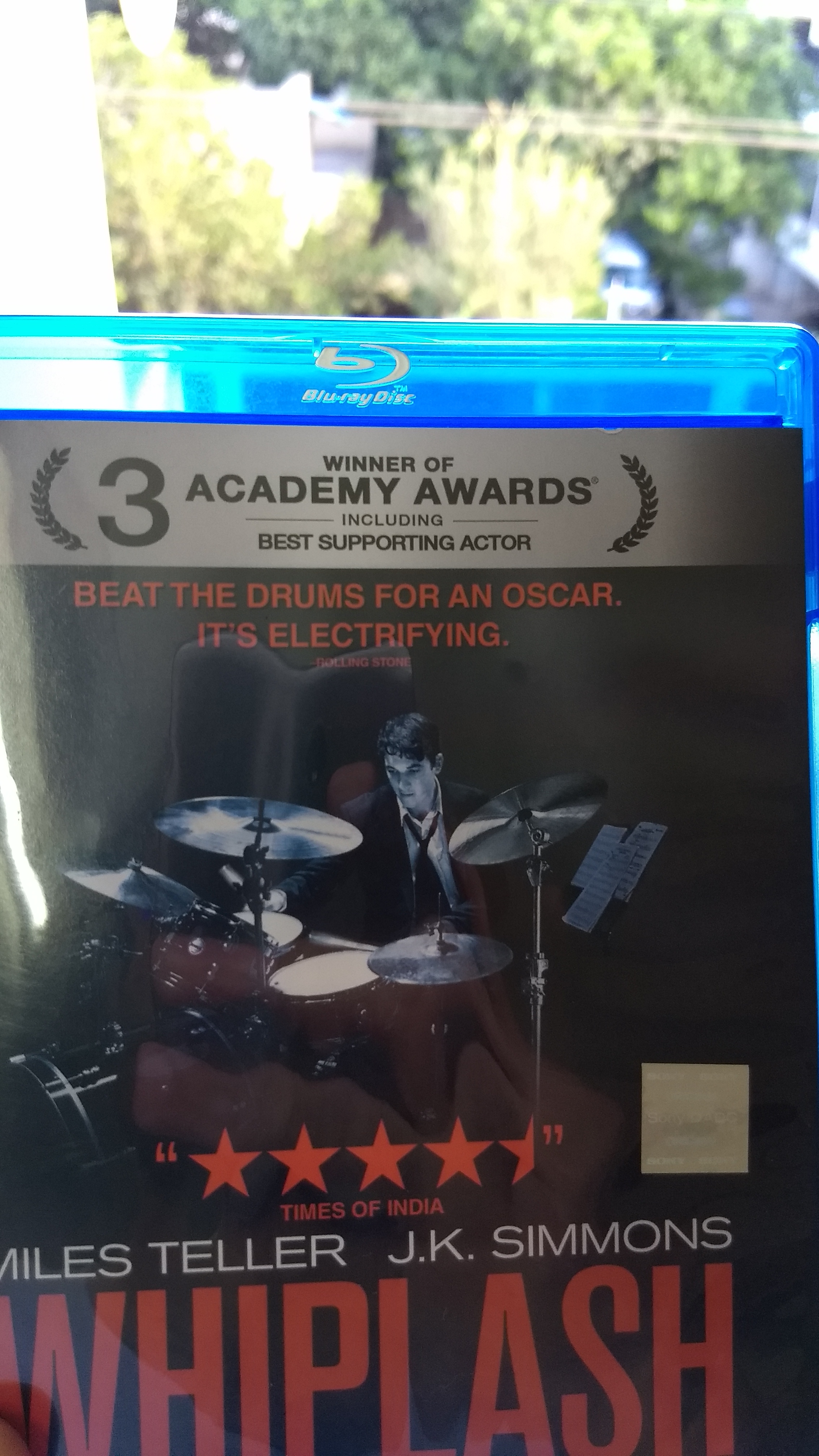
Whiplash: Perfect Trio…

IMG_20171114_080049806

‘Whiplash’ deals with controversial themes…and explores extreme angles of a relationship between a music student and his teacher. How hard an aspiring musician should try for perfection and how hard a teacher can and should push to spot and hone greatness in his disciples….these are a couple of questions that linger in the mind, while watching the film. But, from a cinematic experience, the film is pure joy, with a superb cast making it all believable.

JK Simmons (Fletcher-Teacher) and Miles Tiller (Neiman-Student) compliment each other very well and hold the film together to make sure it doesn’t slip out of the audience belief zone. Mike Tiller displays the range of emotions perfectly, as his character goes through a seesaw of feelings …in quick succession. Worth mention is the initial change in his feelings when Fletcher plays with his psyche, with a bit of unexpected praise and following it up with a chair thrown at full speed.

whiplash1
But ‘Whiplash’ can never be the movie it turned out to be without JK Simmons and he deserves the Oscar every bit of it. Right from the word go, he is unpredictability at its best, which is the core of this character. He has to be both unpredictable and believable at that very moment and he pulls it off with elan.  He keeps the audience guessing as to what his real motives are….and that becomes the driving force of the screenplay.  Worth mention is the scene in the restaurant with Neiman just before the climax, getting him to accept as a drummer in his upcoming programme. It’s tough to be nice without showing any motive and that too after a sonofabitch portrayal he had shown until that point of time and he does it effortlessly.

Of course, Whiplash couldn’t have been possible without the director Damien Chazelle. To conceive and execute such an offbeat story is an extraordinary feat and in the process creates a music-based film that compares with the classic ‘Amadeus’. Interestingly the love-hate relationship of the student-teacher in Whiplash is a tad similar to that of  Salieri-Mozart. In ‘Amadeus’ Salieri’s struggle is more internalized and only comes out as narration…whereas in ‘Whiplash’ it is brought out in several scenes, with ambiguity thrown in, for the sake of driving the plot.

Like any good movie, the heart of the film lies in its climax. All three–Damien Chazelle, JK Simmons and Miles Tiller leave their best to the last. It’s a unique set-up and a mini-movie by itself. If you decide to watch just a portion of the film then this has to be it. And after watching it, there are quite a few takeaways…and it is up to you to pick the version you like. I for one would like to think that Fletcher found both his genius and nemesis.

Related links:

Laksh online on Amadeus

Shoe Dog: Perseverance, Risk, and Company Culture

“Shoe Dog” is a memoir written by Phil Knight, the co-founder and former CEO of Nike. The book provides an inside look at the early days of Nike and Knight’s journey from selling shoes out of the trunk of his car to building one of the most iconic and successful sports brands in the world. It is a compelling story of perseverance, entrepreneurship, and the challenges faced by Knight and his team as they navigate the competitive and ever-changing world of sports footwear.

In the book, Knight shares several key milestones and pivotal moments that shaped Nike’s growth:

  1. The founding of Blue Ribbon Sports: In 1964, Phil Knight and his former track coach, Bill Bowerman, establish Blue Ribbon Sports, a shoe distribution company. Knight begins by selling Japanese running shoes out of his car, laying the foundation for what would eventually become Nike.
  2. The transition to Nike: In 1971, Blue Ribbon Sports rebrands itself as Nike, inspired by the Greek goddess of victory. The company starts manufacturing its own shoes, starting with the iconic Nike Cortez, and begins to gain recognition and popularity in the running community.
  3. The Air Jordan collaboration: In the mid-1980s, Nike faces financial challenges, but a collaboration with basketball superstar Michael Jordan turns the tide. The launch of the Air Jordan line revolutionizes the sneaker industry, propelling Nike to new heights and establishing a powerful brand association with top athletes.
  4. Going public and global expansion: In 1980, Nike goes public, raising significant capital to fund its expansion plans. The company aggressively expands into international markets, particularly in Europe and Asia, solidifying its position as a global leader in athletic footwear.

“Shoe Dog” provides an inspiring and intimate account of the trials and triumphs experienced by Phil Knight and his team as they build Nike from the ground up. It showcases the importance of innovation, determination, and unwavering belief in one’s vision, making it a must-read for entrepreneurs, sports enthusiasts, and anyone seeking inspiration in their own pursuits.

Here are some key takeaways from “Shoe Dog”:

  • Persistence: Phil Knight’s story highlights the importance of perseverance in the face of challenges.
  • Embrace risk and learn from failures: Knight’s willingness to take risks and learn from mistakes played a crucial role in Nike’s success.
  • Strong company culture: Building a strong company culture rooted in shared values is vital for attracting and retaining talented individuals.

If you enjoyed “Shoe Dog,” you may also find the following books relevant and insightful:

  • “Pour Your Heart Into It” by Howard Schultz: In this memoir, the CEO of Starbucks shares his experiences and the principles that guided him in building one of the most recognizable brands in the world.
  • “The Lean Startup” by Eric Ries: This book offers practical advice for entrepreneurs on how to build and launch successful products by utilizing a lean and iterative approach, minimizing waste, and learning from customer feedback.
  • “Start with Why” by Simon Sinek: Sinek explores the power of purpose and provides insights on how to inspire and lead others by starting with a clear understanding of why you do what you do. This book is a valuable resource for understanding the importance of defining and communicating a compelling vision.

These books, like “Shoe Dog,” offer valuable insights into entrepreneurship, leadership, and the challenges faced by businesses on their path to success.

‘Inside Out’: It’s about the mind, stupid!

inside out

There’s a scene in the movie, when joy and sadness…rather the symbols of joy and sadness are together.  Both of them try to figure it out…. how to save the main character from going downhill.

Simple at its best, this scene might have a thousand meanings and find an echo in several religions and schools of philosophy. The lead to this scene though , is not some maudlin train of thought about life, instead thy are the inner workings of the main character’s mind.. .a small kid’s mind. Yes, Pixar team does this unthinkable of making a child’s mind the center stage of a movie,  to a delightful effect.

‘Inside Out’ has all  the trappings of a wonderful animation film–great quality of animation, terrific characters, super voice-casting etc etc.  But the real deal, is the story idea that blends science with emotion. All the concepts of core-memories, personality islands, memory dump, imagination land, dream factory, dark sub-conscious, train of thought, abstract thoughts etc are presented in an entertaining manner.  A must watch for any movie lover.

bing bong


Tailpiece: Bing Bong is probably one of the best Hero characters ever, a-la terminator willing to slip into oblivion to protect her little friend.

Related Links
‘Take her to the moon for me’
Inside Out: a crash course in PhD philosophy of self that kids will get first
The Science of ‘Inside Out’
How ‘Inside Out’ Explains The Science Of Memory