‘The Fugitive,’ a cinematic gem from 1993, continues to captivate audiences with its timeless appeal. I vividly recall my first viewing experience at the Surya 70mm theater in Abids, Hyderabad, a venue known for its colossal screen that only added to the grandeur of this thrilling masterpiece. Even the opening titles left a lasting impression, so much so that I embarked on a creative journey of my own, attempting to recreate them during my 2D and 3D Animation course.
Generated using ideogram.ai
The heart of ‘The Fugitive’ lies in its masterful storytelling, which seamlessly aligns with Joseph Campbell’s Hero’s Journey. Dr. Richard Kimble, played impeccably by Harrison Ford, epitomizes the hero wrongly accused and thrust into an unfamiliar world. Ford’s portrayal is nothing short of perfection, as he effortlessly conveys the character’s blend of emotions and action. It’s a role that suited him to a T, and his performance remains one of the highlights of his illustrious career.
But let’s not forget the indispensable presence of Tommy Lee Jones, who delivers a performance that earned him a well-deserved Oscar for Best Supporting Actor. His character, U.S. Marshal Samuel Gerard, serves as the audience’s anchor throughout the film’s tumultuous journey. We traverse the spectrum of mistrust to trust alongside him, thanks to Jones’s commanding screen presence and unwavering commitment to the role.
‘The Fugitive’ is a testament to the power of storytelling and character-driven cinema. It’s a gripping tale of justice, survival, and relentless pursuit, all expertly woven together by director Andrew Davis. The film’s ability to captivate and resonate with audiences even decades later is a testament to its enduring quality. It’s not just a movie; it’s a masterclass in cinematic excellence that continues to inspire both aspiring filmmakers and seasoned moviegoers alike. So, whether you’re revisiting it or experiencing it for the first time, ‘The Fugitive’ is a cinematic journey you won’t want to miss.
Joseph Campbell’s Archetypal Path in ‘The Fugitive’
‘The Fugitive’ is a prime example of how a well-crafted screenplay can closely adhere to Joseph Campbell’s Hero’s Journey structure while also incorporating some unique elements. As a popular movie critic and an expert in the Hero’s Journey, let’s analyze the film’s structure in detail:
1. The Ordinary World: The movie introduces Dr. Richard Kimble in his ordinary world as a successful surgeon leading a contented life with his wife. This phase establishes his character and sets the stage for the ensuing journey.
2. Call to Adventure: The inciting incident occurs when Kimble’s wife is murdered, and he is wrongfully convicted of the crime. This sudden and tragic event propels him into an unexpected and dangerous journey.
3. Refusal of the Call: Initially, Kimble is reluctant to become a fugitive. He chooses to cooperate with the legal system to prove his innocence, exemplifying his initial refusal to embrace the role of the hero.
4. Meeting the Mentor: Throughout his journey, Kimble encounters various mentors, albeit in unconventional ways. He seeks guidance from the mysterious one-armed man, who becomes a crucial figure in his quest for the truth.
5. Crossing the Threshold: After narrowly escaping from prison, Kimble enters the world of a fugitive, leaving behind his comfortable life. This is a clear departure from his ordinary world.
6. Tests, Allies, and Enemies: Kimble faces a series of challenges and obstacles as he evades capture by U.S. Marshal Samuel Gerard. He gains allies like Deputy U.S. Marshal Cosmo Renfro, while also confronting enemies who want to capture or kill him.
7. Approach to the Inmost Cave: Kimble gradually uncovers the truth about his wife’s murder and realizes that powerful figures are involved in a conspiracy. This stage represents his approach to the heart of the mystery.
8. Ordeal: The film’s climax involves a thrilling showdown at a hotel, where Kimble confronts the real murderer, Dr. Charles Nichols. This is a life-or-death moment, a classic Hero’s Journey ordeal.
9. Reward: Kimble not only survives but also exposes the truth about the conspiracy. He clears his name, fulfilling the hero’s goal, and gains the satisfaction of justice served.
10. The Road Back: Kimble’s journey takes a final turn as he and Gerard cross paths again. This phase highlights Gerard’s transformation from adversary to ally as he realizes Kimble’s innocence.
11. Resurrection: The final scene in the car underscores the transformation of both Kimble and Gerard. Kimble finds not only vindication but also closure, and so does Gerard, shields him from prying media and avenging police officers.
12. Return with the Elixir: Kimble returns to his ordinary world, forever changed by his experiences. He has the satisfaction of justice served and a newfound respect for Gerard, who returns to his role as a dedicated lawman.
‘The Fugitive’ impressively adheres to Joseph Campbell’s Hero’s Journey structure while infusing it with the suspense and intensity of a modern thriller. It’s a testament to the film’s well-crafted screenplay and the skilled direction of Andrew Davis. The movie’s ability to blend classic storytelling elements with contemporary suspense and action is one of the reasons it remains a beloved cinematic classic. ‘The Fugitive’ stands as a testament to the enduring power and versatility of the Hero’s Journey narrative framework in the world of cinema.
The speaker discusses the potential of using artificial intelligence, particularly AI-based tutoring systems, to transform education positively. They address concerns about AI being used for cheating and argue that with proper safeguards and guidelines, AI can enhance the learning experience. The speaker introduces Khanmigo, an AI tutor developed by Khan Academy, which offers personalized guidance and assistance to students. They highlight various features of Khanmigo, such as its ability to help with math, computer programming, reading comprehension, writing, and even engaging in conversations with historical figures or characters from literature. The speaker emphasizes that AI can also support teachers by providing lesson plans, progress reports, and grading assistance. They conclude by advocating for responsible AI development and regulation to harness its potential for the betterment of education and human intelligence.
“Fargo” takes you on a riveting journey as it introduces the clash of two devils within the seemingly tranquil embrace of an idyllic town. The heart of the story rests upon the shoulders of a devil in the making, a hapless car salesman whose knack for stumbling into trouble becomes a recurring motif. With every misstep he takes, the tale delves deeper into the darker corners of his character, drawing eerie parallels to the transformation of Gollum in ‘The Lord of the Rings’.
As the plot unfolds, one cannot help but notice the impeccable craftsmanship of the Coen brothers. In an interview, they reveal their tendency to seldom offer a safe haven in their narratives, yet they make an exception in “Fargo”. The cop character and her husband form a rock-solid bond that radiates a sense of security and stability, acting as an unwavering anchor amidst the chaos. This relationship becomes the linchpin around which all things good revolve, showcasing the Coens’ ability to inject warmth and hope even into the most treacherous narratives.
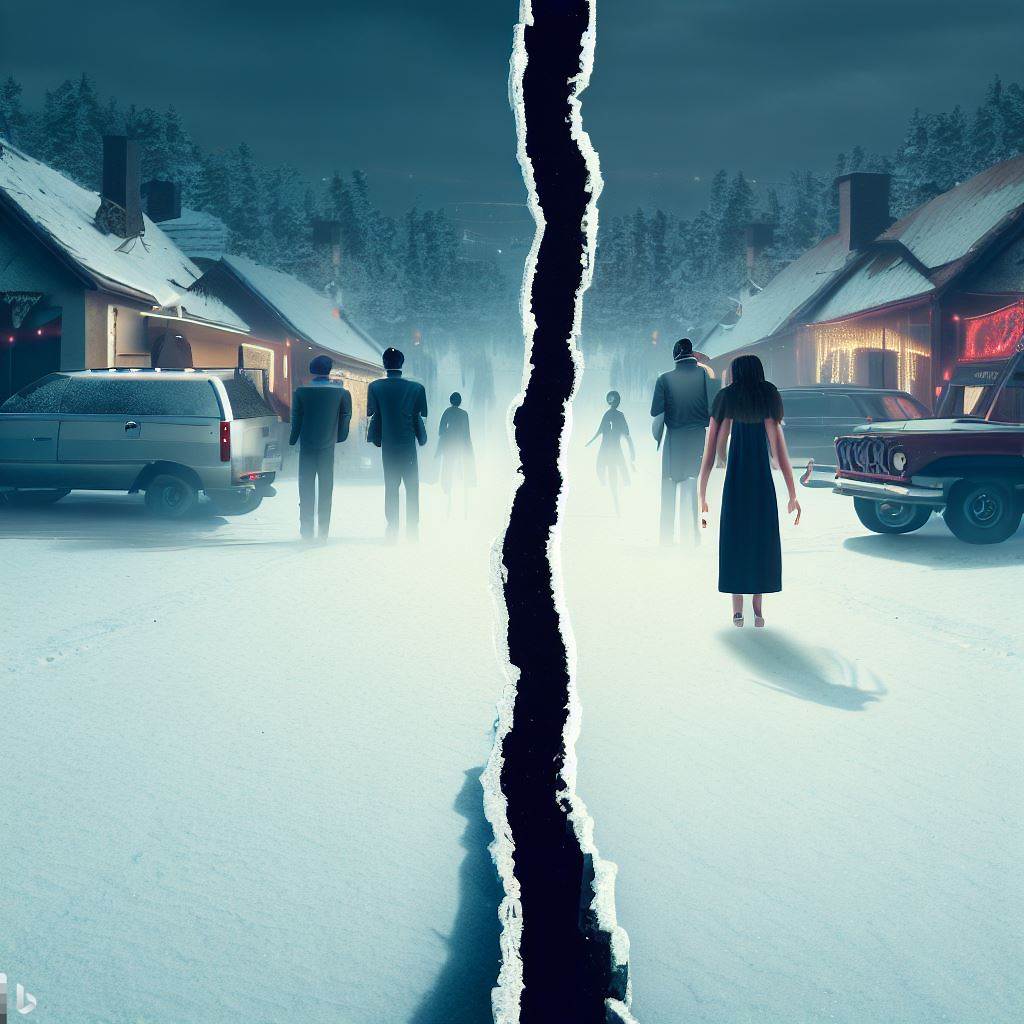
The film’s brilliance lies in the stark dichotomy it presents – the clash between good and evil. This contrast serves as a canvas on which hues of complexity are painted against the backdrop of a seemingly pristine, yet gloomy, snow-covered town. The frigid landscape mirrors the chilling choices made by the characters, creating an atmosphere that is both captivating and haunting.
For avid Coen brothers’ fans, “Fargo” is an absolute must-watch. The film encapsulates their signature style, complete with dark humor, intricate characters, and a plot that constantly keeps you guessing. As the two devils dance through the snow, and the cop and her husband defy the odds, “Fargo” weaves a tale that is as captivating as it is chilling. In the end, the movie stands as a testament to the Coen brothers’ mastery in storytelling, offering an experience that is both thought-provoking and thoroughly entertaining.