Arlington Road is a 1999 psychological thriller film directed by Mark Pellington and starring Jeff Bridges, Tim Robbins, Joan Cusack, and Hope Davis. The movie revolves around Michael Faraday, a widowed professor of American history who begins to suspect that his new neighbors, the Langs, are not who they appear to be.
As Faraday delves deeper into the Langs’ past, he discovers a web of lies and deceit that threatens to destroy his life and those around him. The movie builds up to a shocking and unexpected climax that leaves viewers questioning the true nature of the Langs and the people around them.
Overall, Arlington Road is a well-crafted thriller that keeps viewers on the edge of their seats. The movie explores themes of paranoia, suspicion, and the dangers of jumping to conclusions without sufficient evidence. With strong performances from its cast and a well-crafted plot, Arlington Road is a movie that will leave a lasting impression on audiences. Must watch for Jeff Bridges and Tim Robbins fans.
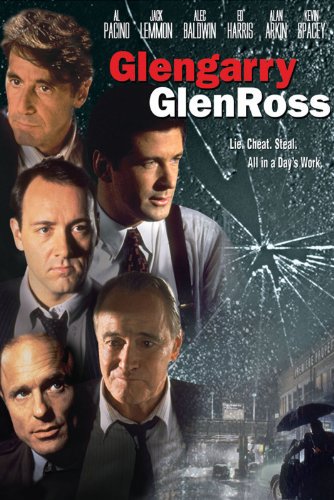
Glengarry Glen Ross is a 1992 film based on a play by David Mamet. The movie follows a group of real estate salesmen who are struggling to sell properties in a tough market. The film features an all-star cast including Al Pacino, Jack Lemmon, Alec Baldwin, Kevin Spacey, and Ed Harris.
Characters and motivation
The characters are portrayed as desperate, scheming, and cutthroat, willing to do whatever it takes to close a deal. The characters are portrayed as desperate, scheming, and cutthroat, willing to do whatever it takes to close a deal.
The character of Ricky Roma, played by Al Pacino, is the top salesman in the company. He is smooth-talking and manipulative, and he knows how to close a deal. His motivation is to make as much money as possible, and he is willing to bend the rules to achieve his goal.
Shelley “The Machine” Levene, played by Jack Lemmon, is an older salesman who is struggling to make sales. He is desperate to keep his job and maintain his reputation as a successful salesman. His motivation is to regain his former glory, help out her ailing daughter and prove that he still has what it takes to close a deal.
Dave Moss, played by Ed Harris, is a salesman who is frustrated with the company and his low sales numbers. He hatches a plan to steal the valuable sales leads from the office safe and sell them to a rival company. His motivation is to get revenge on the company and make a quick profit.
John Williamson, played by Kevin Spacey, is the office manager who is responsible for assigning leads to the salesmen. He is cold and calculating and is more concerned with the bottom line than the well-being of his employees. His motivation is to keep the company profitable and his own job secure.
Alec Baldwin’s character, Blake, is a corporate trainer who delivers the famous “ABC” (Always Be Closing) speech to the salesmen. He is aggressive and abusive, and his motivation is to intimidate the salesmen into working harder and making more sales. (First prize? A Cadillac and third prize? Getting fired)
Their motivations drive the plot and provide the necessary impetus for the climax. The climax of the film exposes the corrupt and unethical behavior of the salesmen and reveals the consequences of their actions. The investigation and the subsequent fallout demonstrate the lengths that the salesmen will go to in order to secure a sale, and the consequences of their actions ultimately lead to their downfall.
Cast and Performance
Glengarry Glen Ross features an exceptional cast of talented actors, each delivering powerful performances in their respective roles. It is difficult to single out just one actor who gave the best performance, as each actor brought a unique perspective and interpretation to their character.
However, Al Pacino’s portrayal of Ricky Roma stands out as particularly memorable and captivating. Pacino’s performance as the smooth-talking and manipulative top salesman was both charismatic and chilling. He brought a sense of intensity and energy to the role, and his dialogue delivery was impeccable. His silence speaks volume as well, like in the scenes towards the climax, with his client who will soon become his ex-client. Pacino’s performance was widely acclaimed and earned him an Academy Award nomination for Best Supporting Actor.
That being said, Jack Lemmon’s portrayal of Shelley Levene was also remarkable. Lemmon brought a sense of vulnerability and desperation to the role, and his character’s struggle to make a sale was both heartbreaking and relatable. His emotional breakdown in the final scene and its subdued portrayal, was a powerful and poignant moment in the film.
Overall, all the actors delivered excellent performances, and each performance added to the depth and complexity of the film, and together they created a memorable and impactful ensemble, to make Glengarry Glen Ross a gripping and intense film.
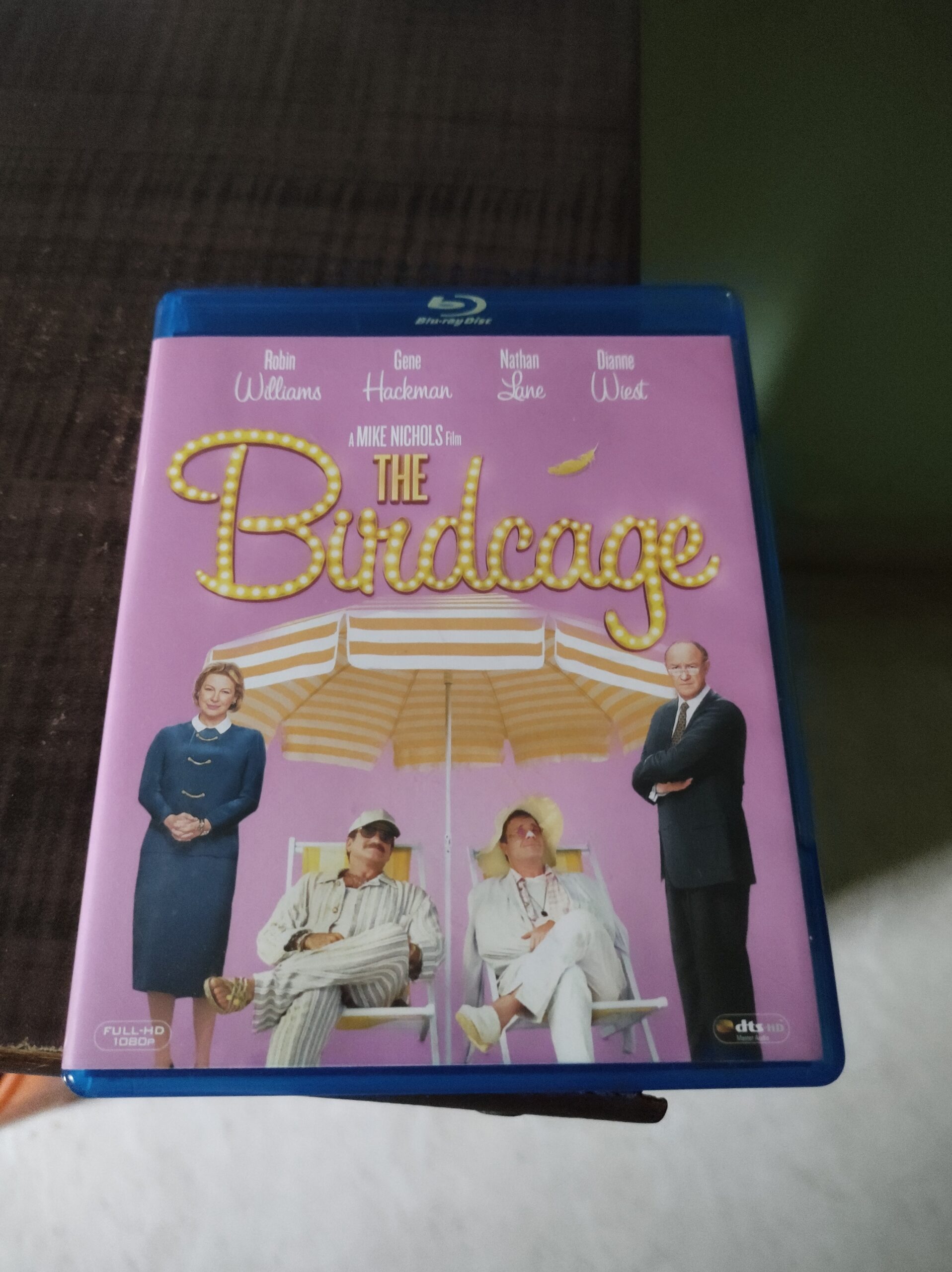
“The Birdcage” is a 1996 American comedy film directed by Mike Nichols, starring Robin Williams, Gene Hackman, Nathan Lane, and Dianne Wiest. The movie is a remake of the 1978 French-Italian film “La Cage aux Folles.”
The film follows a gay couple, Armand (Robin Williams) and Albert (Nathan Lane), who run a drag nightclub in Miami Beach. When their son, Val (Dan Futterman), announces that he’s getting married to the daughter of a conservative politician, they are forced to hide their lifestyle and pretend to be straight. Chaos ensues when the conservative family decides to visit their home.
The movie is a delightful comedy that touches on the themes of love, family, acceptance, and identity. The performances by Robin Williams and Nathan Lane are top-notch, and they bring a lot of humor and heart to the film. Their chemistry on screen is fantastic, and they play off each other’s strengths beautifully. The supporting cast, including Gene Hackman, Dianne Wiest, and Christine Baranski, are all excellent and add to the film’s comedic charm.
The movie’s direction by Mike Nichols is solid, and he does a great job of balancing the humor with the more emotional moments. The script, written by Elaine May, is smart and witty, with some great one-liners and hilarious moments that will make you laugh out loud.
Overall, “The Birdcage” is a fantastic comedy film that still holds up well today. It’s an excellent showcase of Robin Williams and Nathan Lane’s talent and a great reminder of the importance of acceptance and love. If you’re looking for a fun and heartwarming movie to watch, “The Birdcage” is definitely worth checking out.