Category Archives: Leadership

The Monsters Among Us: Why Nuremberg (2025) Is the History Lesson We Need Right Now

Evil doesn’t arrive shouting. It comes wearing a charming smile.

That unsettling truth sits at the heart of James Vanderbilt’s Nuremberg, a film that strips away comforting illusions about the nature of atrocity. Eighty years after the most consequential trials of the 20th century, this psychological thriller poses an uncomfortable question to contemporary audiences: not “Could we recognize another Hitler?” but “Could we recognize the patterns that enable authoritarianism before it’s too late?”

Russell Crowe Delivers a Career-Defining Performance

Russell Crowe dominates every frame as Hermann Göring, Hitler’s second-in-command, in what critics have called “a masterclass in subtle, nuanced acting—absolutely electrifying”. His Göring is equal parts monstrous and magnetic, a man who understands performance as power.

RogerEbert.com’s Matt Zoller Seitz captures why Crowe’s work transcends typical historical drama: “Like Gene Hackman in his greatest ’80s and ’90s performances, Crowe has such a regular-guy energy that on those rare occasions when Göring is thwarted or disappointed and we get a glimpse of his capacity for overwhelming violence, it somehow comes as an unsettling surprise”. That “regular-guy energy” is precisely the point—Crowe makes Göring simultaneously charismatic and terrifying, embodying the film’s thesis that history’s greatest monsters often hide behind ordinary faces.

Rami Malek’s portrayal of psychiatrist Douglas Kelley has divided critics more sharply, with some finding his performance compelling while others, like The Guardian’s Peter Bradshaw, dismissed it as “deeply silly”. Yet this friction mirrors the film’s central tension: Kelley’s intellectual ambition versus his growing moral horror.

A Psychological Chess Match in History’s Shadow

The film’s brilliance lies not in courtroom theatrics but in the intimate cat-and-mouse dynamic between Kelley and Göring. What begins as psychiatric evaluation transforms into something far more dangerous—a “battle of intellect and manipulation between Kelley and Göring, two men driven by ego, curiosity, and a dangerous desire for control”.

Director Vanderbilt stages this confrontation with precision, creating “courtroom scenes that bristle with energy, dialogue that snaps with a rhythm reminiscent of Aaron Sorkin, and moral tension that rarely lets up”. The visual texture—smoky interrogation rooms, measured silences, the bureaucratic weight of justice finding its footing—evokes classic Hollywood while maintaining a distinctly modern psychological edge.

Critics Divided, Audiences Captivated

Nuremberg has generated a fascinating reception split. Professional critics awarded it a 72% approval rating on Rotten Tomatoes, while audiences embraced it overwhelmingly at 96%. This gap suggests that while the film may lack the artistic sophistication some critics demand, it succeeds magnificently at its primary mission: making history emotionally resonant.

MetricResult
Rotten Tomatoes (Critics)72% [rottentomatoes]​
Rotten Tomatoes (Audience)96% [rottentomatoes]​
Box Office (Worldwide)$39.5 million [the-numbers]​
Oscar ShortlistsBest Original Score, Best Makeup & Hairstyling [facebook]​
Golden Globe Nominations3 [goldenglobes]​

The film has earned recognition beyond commercial success, winning the Audience Choice Award at Heartland International Film Festival and the Ateneo Guipuzcoano Award at San Sebastián. It’s now shortlisted in two Academy Award categories for the 98th Oscars.

Why This Film Matters Now

Nuremberg arrives at a moment when Holocaust denial and World War II revisionism are “more mainstream than ever,” according to critics observing the cultural landscape. The film’s most powerful message isn’t about recognizing obvious villains—it’s about understanding the psychological patterns that enable authoritarianism before catastrophe.

Kelley’s real-life conclusion—that Nazi leaders were “not extraordinary monsters but rather ordinary individuals”—remains the film’s most disturbing revelation. If these men were psychiatrically normal, then the capacity for such evil exists in any society under the right conditions. As one reviewer noted, Nuremberg “is a haunting reminder that the spectacle of justice can sometimes mirror the performance of guilt”.

The tragic epilogue, only briefly addressed on screen, haunts the narrative: Kelley himself died by suicide in 1958, using the same method—cyanide—that Göring employed to cheat the hangman. The psychiatrist who studied evil became, in death, eerily connected to his subject.

The Verdict

Nuremberg succeeds not as flawless cinema but as necessary cultural intervention. Despite occasional pacing issues and the critic-audience divide, it accomplishes something vital: forcing viewers to confront how power corrupts and how ordinary people become instruments of extraordinary evil. Peter Travers perhaps said it best: “What to do when a great actor is stuck in a not-so-great movie? You bite the bullet and watch anyway if the actor in question is Russell Crowe”.

For audiences seeking meaningful historical drama with contemporary urgency, Nuremberg delivers. It reminds us that “never again” demands constant vigilance—not complacent certainty that we’d recognize evil if we saw it.

Rating: ★★★½ out of ★★★★★

Embracing Tranquility in Leadership: Insights from Thyagaraja’s “Saantamu Leka”

image generated by the author and DALL.E-3

In the symphony of leadership, the notes of tranquility often get overshadowed by the crescendos of decision-making and the fortissimos of innovation. Yet, it is in the quietude of a leader’s mind that the most profound strategies are composed. Thyagaraja’s “Saantamu Leka,” a kriti in Raga Sama, resonates with this truth, harmonizing the ancient wisdom of spirituality with the modern cadences of leadership.

The Essence of “Saantamu Leka”

Thyagaraja, in his kriti, articulates a fundamental principle: without inner peace, there is no true comfort. This message is not just a spiritual axiom but a strategic imperative for leaders. The kriti unfolds this theme through its verses, emphasizing that wealth, family, knowledge, and rituals are but dissonant chords without the melody of tranquility.

Leadership Lessons from the Kriti

The blog “Thyagaraja Vaibhavam” delves deeper into the kriti, offering insights that are particularly pertinent for leaders. It speaks of “upasantamu,” a state of calm that is essential for liberation from the cyclicality of action and reaction—a concept that leaders can apply to break free from reactive patterns and cultivate a proactive mindset.

The Confluence of Music and Message

Raga Sama, known for its soothing quality, underscores the kriti’s message musically. For leaders, this serves as a metaphor for the harmony that arises from a tranquil mind—a state from which vision and clarity emerge.

In Conclusion: The Leader’s Quest for Peace

“Santamu Leka” is a timeless ode to the power of peace. It teaches leaders that the true measure of success is not just in outcomes but in the serenity with which one navigates the complex dynamics of business and life.

A Cinematic Parallel

In the spirit of movies and management, consider the calm demeanor of Atticus Finch in “To Kill a Mockingbird” or the composed resolve of Captain Jean-Luc Picard in “Star Trek.” Their tranquility in the face of turmoil is their strength, much like the peace Thyagaraja espouses.

As you lead, let the tranquility that “Saantamu Leka” advocates be your guide. It is in the silent beats of reflection that the true rhythm of leadership is found.

The Invaluable Essence of Time Management: Lessons from Azim Premji

@Hyderabad Airport- 1999


In our pursuit of progress and success, we often prioritize the accumulation of wealth, inadvertently relegating time to a secondary role. However, it is essential to recognize that while money can be earned or regained, time is an irretrievable asset. This article delves into the significance of effective time management, highlighting a personal encounter with the renowned business tycoon, Azim Premji, and the valuable lessons gleaned from his exemplary approach to handling time.

Most of the times we associate our progress with money and relegate time to background. But the truth of life is, one can earn money at any time, or even make up for lost money, but one cannot earn back time or make up for lost time.

Sometime in 1999, I had the opportunity to meet Sri Azim Premji in the airport. There was some delay in the regular flights, due to some cancellation and Indian Airlines offered a complementary breakfast spread. I spotted him with a couple of his colleagues, in apparent serious discussion, while sampling a few food items. One could immediately guess that there was something important planned ahead and the flights issue, put a dampener on it, and he was doing his best to compensate and most importantly manage time effectively.

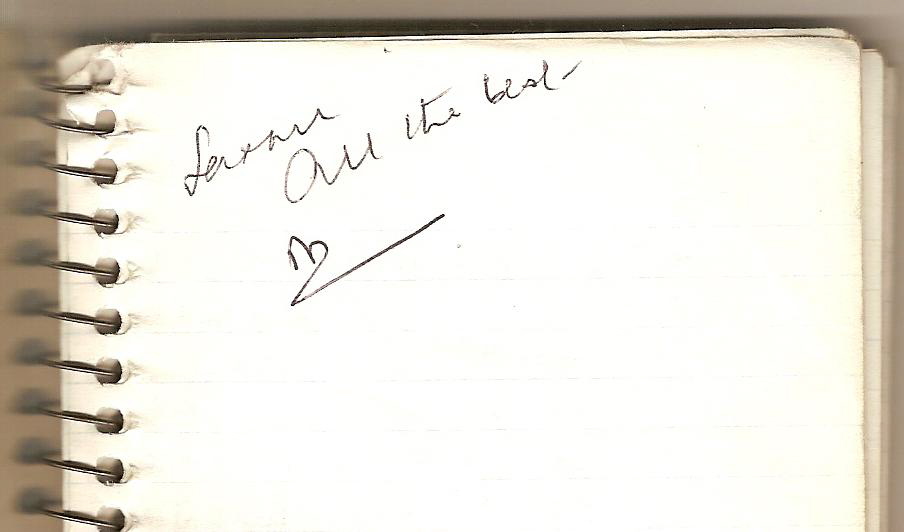
Time, the elusive constant that we often take for granted, holds a profound significance in our lives. As I reflect on my interaction with Azim Premji back in 1999, the airport encounter painted a vivid picture of a man who valued time above all else. Amidst flight delays and disrupted schedules, Premji’s unwavering focus on managing time efficiently was palpable. Even as I approached him seeking an autograph, his initial reaction conveyed the urgency and importance he placed on his time. Nevertheless, upon discovering my professional aspirations, his demeanor softened, and he graciously obliged, leaving little room for small talk. It was evident that individuals like Azim Premji regard time management as paramount, proactively taking charge of their schedules instead of allowing time to dictate their lives.

Observing Azim Premji engrossed in earnest discussions with his colleagues, his unwavering commitment to optimizing time became increasingly evident. With every nibble of food and every exchange of ideas, he exuded an aura of purposeful efficiency, unaffected by the curious gazes of onlookers. Premji’s approach to time management exemplified a cardinal rule: by projecting oneself as someone prepared and ready for any challenge, the schedule inevitably becomes packed with meaningful tasks. It was an unspoken lesson in conveying priorities through actions, ensuring that each moment is allocated to the most significant endeavors. The encounter left an indelible impression, emphasizing the importance of proactive time management as a crucial aspect of achieving success.

“To see the world, things dangerous to come to, to see behind walls, to draw closer, to find each other, and to feel. That is the purpose of life.” – The Secret Life of Walter Mitty

This quote from the movie The Secret Life of Walter Mitty encapsulates the essence of effective time management discussed in this article. The protagonist embarks on an extraordinary journey, driven by the realization that life is about experiencing moments, connecting with others, and truly feeling. Similarly, Azim Premji’s relentless pursuit of time management reflects a deeper understanding of life’s purpose. By efficiently managing time, we create opportunities to explore, grow, and connect with the world around us. Premji’s dedication to optimizing time serves as a powerful reminder that time is not merely a resource to be consumed but a catalyst for meaningful experiences and personal growth.

In a world often preoccupied with financial gains, it is crucial to reorient our perspective and recognize the true value of time.